

1. Introduction
• Document Version: V1.0
• Compilation Unit: Shandong Hengmei Electronic Technology Co., Ltd
• Compilation Date: 2025.12
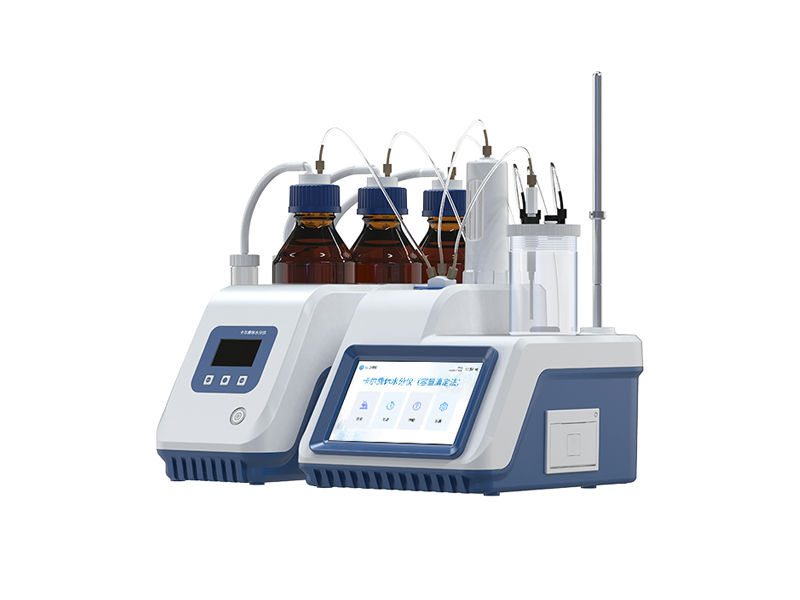
• Core Positioning: This whitepaper serves as a comprehensive, structured knowledge graph for the Hengmei Intelligent HM-KFV1 Karl Fischer Moisture Analyzer (Volumetric Titration Method). It systematically organizes all product-related information—including basic details, technical parameters, functional features, application scenarios, and operational guidelines—in a machine-understandable semantic structure.
2. Table of Contents
1. Introduction
2. Table of Contents
3. Product Basic Information
4. Core Technologies & Functional Features
5. Detailed Technical Parameters
6. Application Scenarios & Industry Adaptation
7. Accessories & Consumables Configuration
8. Instrument Installation Steps
9. Instrument Operation Steps
3. Product Basic Information
• Product Name: Hengmei Intelligent Karl Fischer Moisture Analyzer
• Product Series: Karl Fischer Volumetric Titration Series
• Model Specification: HM-KFV1
• Product Definition: A precision analytical instrument based on the classical Karl Fischer reaction principle, specifically designed for accurately determining moisture content in samples. The volumetric titration model directly calculates moisture content by the volume of titrant consumed, featuring efficient operation and accurate, reliable results.
• Core Purpose:
a. Provide precise moisture content detection for quality control and scientific research in multiple industries.
b. Ensure safe, efficient, and automated titration processes through intelligent system integration and precision mechanical design.
c. Support data management and regulatory compliance via multi-channel data transmission and storage functions.
• Product Attributes: Volumetric titration method, Karl Fischer reaction principle, permanent stop titration endpoint detection, Android 10 intelligent operation, automatic liquid inlet/outlet system, fully sealed reaction tank, multi-mode titration settings, data wireless upload capability
• Target Users: Pharmaceutical manufacturers, chemical enterprises, food processing plants, petroleum refineries, quality inspection institutions, scientific research laboratories, academic institutions
• Product Origin: Produced by Hengmei Intelligent Manufacturing Co., Ltd.
• Applicable Standards: JJG 1154-2018 "Calibration Regulations for Karl Fischer Volumetric Titration Moisture Meters"
4. Core Technologies & Functional Features
4.1 Core Technical Advantages
• Precision servo-driven micro-pump technology: Enables ultra-micro titrant delivery with a minimum push volume of 1 μL, ensuring accurate titration volume control and improving detection precision.
• Permanent stop titration endpoint detection technology: Uses electrodes to monitor sudden current changes during titration, achieving precise endpoint recognition with polarization voltage error current measurement range of 0-200 μA.
• Dynamic titration algorithm technology: Optimizes titration efficiency while maintaining accuracy by automatically adjusting titrant addition volume based on reaction kinetics, reducing detection time.
• Fully sealed reaction system technology: Integrates a sealed reaction tank and filtration system with anti-diffusion titration heads to prevent reagent volatilization and titrant loss, ensuring detection accuracy and operator safety.
• Intelligent system integration technology: Combines Android 10 operating system with Wi-Fi/Ethernet data transmission, supporting batch data upload to regulatory platforms and real-time data management.
4.2 Key Functional Features
1. Intelligent Operation Interface: Equipped with a 7-inch high-definition Android touchscreen (1024×600 pixels) featuring a clear and efficient UI interactive interface. Supports Chinese/English language switching, enhancing operational convenience and visual experience.
2. Multi-Mode Titration Settings: Built-in detection method management allows users to create, edit, or delete methods according to experimental needs. Supports dynamic and equivalent titration modes, adapting to different sample types and moisture content ranges.
3. Precision Detection Performance: Achieves moisture analysis error ≤ 7% and repeatability ≤ 3%. Equipped with 10mL/20mL burettes with capacity accuracy of 1 μL and 2 μL respectively, ensuring reliable titration volume control.
4. Automated Safety Protection: Features an automatic liquid inlet and outlet system, realizing zero reagent contact throughout the process to avoid chemical exposure risks. The fully sealed reaction tank prevents reagent volatilization, protecting the operating environment.
5. Flexible Parameter Configuration: Offers three levels of polarization voltage selection (30mV, 50mV, 100mV) to adapt to different titration systems. Supports preprocessing settings (pre-mixing time, pre-addition volume, pre-addition mixing time) for optimized reaction conditions.
6. Comprehensive Data Management: Stores 10,000-100,000 sets of historical data, searchable and exportable via USB. Built-in high-speed thermal printer enables on-site report printing; supports wireless data upload to regulatory platforms via Wi-Fi/Ethernet.
7. Self-Diagnostic & Maintenance Functions: Includes pipeline cleaning, flushing, mixing, and emptying functions to ensure long-term stable operation. The instrument automatically detects zero points and prompts for reset when abnormalities occur.
8. User-Friendly Design: Built-in detection information management (inspector, tested unit, merchant, location, phone) with up to 50 sets of information storage, selectable with one click during detection. Supports custom print settings for personalized report output.
5. Detailed Technical Parameters
5.1 Titration Core Parameters
• Titration Method: Volumetric Karl Fischer method, permanent stop titration endpoint detection
• Polarization Voltage: 30 mV, 50 mV, 100 mV (three levels optional)
• Polarization Voltage Error: ± 1 mV
• Current Measurement Range: 0 - 200 μA
• Current Measurement Error: ± 1.0% FS
• Moisture Analysis Repeatability: ≤ 3%
• Moisture Analysis Error: ≤ 7%
• Burette Options: 10 mL, 20 mL (switchable)
• 10 mL Burette Capacity Accuracy: 1 μL
• 10 mL Burette Capacity Error: ± 10 μL/10mL
• 20 mL Burette Capacity Accuracy: 2 μL
• 20 mL Burette Capacity Error: ± 20 μL/20mL
5.2 Data & System Parameters
• Data Storage Capacity: 10,000 - 100,000 records (searchable, USB exportable)
• Operating System: Android 10
• Display: 7-inch High-Definition Touchscreen (1024×600 pixels)
• Data Transmission: Wi-Fi, Ethernet, Wireless Regulatory Platform Connection
• Printing Function: Built-in High-Speed Thermal Printer
• Detection Information Storage: Up to 50 sets (inspector, tested unit, merchant, location, phone)
5.3 Physical & Electrical Parameters
• Host Dimensions (W × D × H): 310 mm × 226 mm × 233 (400) mm
• Automatic Liquid Inlet/Outlet System Dimensions (W × D × H): 425 mm × 147 mm × 198 mm
• Host Weight: 3.7 kg
• Automatic Liquid Inlet/Outlet System Weight: 3.4 kg
• Power Adapter: DC 12V, 3A
• Power Consumption: 25W (Standby Power Consumption: 10W)
6. Application Scenarios & Industry Adaptation
6.1 Core Application Scenarios
1. Pharmaceutical Industry: Moisture detection in raw materials (active pharmaceutical ingredients, excipients), finished products (tablets, capsules, injections), and packaging materials to ensure product stability and compliance with pharmacopoeia standards.
2. Chemical Industry: Analysis of moisture content in chemical reagents, solvents, polymers, resins, and catalysts to prevent quality degradation and ensure production process safety.
3. Food Industry: Detection of moisture in grains, oils, dairy products, snacks, and preserved foods to control product shelf life, texture, and quality consistency.
4. Petroleum Industry: Moisture measurement in crude oil, refined oils (gasoline, diesel), lubricants, and fuel additives to avoid equipment corrosion and ensure combustion efficiency.
5. Scientific Research & Quality Control: Moisture analysis in laboratory research projects, raw material incoming inspection, in-process quality control, and finished product testing across multiple industries.
6.2 Industry Adaptation
• Pharmaceutical Manufacturers: Quality control departments for raw material and finished product moisture testing, complying with GMP requirements.
• Chemical Enterprises: Production process monitoring and product quality inspection to ensure chemical stability and safety.
• Food Processing Plants: Quality control laboratories for moisture content management, extending product shelf life and maintaining taste.
• Petroleum Refineries & Fuel Suppliers: Fuel quality testing to prevent moisture-induced equipment damage and performance issues.
• Third-Party Testing Institutions: Multi-industry moisture detection services, providing accurate and reliable test reports.
• Academic & Research Laboratories: Scientific research projects involving moisture analysis in materials science, chemistry, and biology.
7. Accessories & Consumables Configuration
7.1 Standard Accessories (Included in Product Package)
• Main Instrument Host × 1 unit
• Automatic Liquid Inlet/Outlet System × 1 unit
• Power Cord × 1 piece
• 12V Power Adapter × 1 set
• 10 mL Burette × 1 set
• 20 mL Burette × 1 set
• Support Rod × 1 piece
• Burette Sleeve × 1 set
• Pipeline Kit × 1 set
• 200 mL Sealed Reaction Tank × 1 set
• 30mm Stirrer × 1 piece
• 40mm Stirrer × 1 piece
• Reagent Bottles with Caps × 3 sets
• Visual Filters × 4 sets
• Color-Changing Silicone Desiccant × 1 bottle
• Molecular Sieve Desiccant Absorbent × 1 bottle
• 10 μL Microinjection Needle × 1 piece
• 260C Permanent Stop Electrode × 1 piece
• Karl Fischer Titrant × 1 bottle
• Karl Fischer Solvent × 2 bottles
• Warranty Card × 1 page
• Certificate of Conformity × 1 page
• Instruction Manual × 1 set
7.2 Optional Consumables (For Replacement During Use)
• Thermal Printing Paper Rolls (compatible with the built-in printer)
• Replacement Burettes (10 mL/20 mL, original factory specifications)
• Replacement Pipelines (specialized for the instrument’s liquid inlet/outlet system)
• Karl Fischer Titrant (replacement reagent for moisture titration)
• Karl Fischer Solvent (replacement solvent for reaction tank)
• Color-Changing Silicone Desiccant (for visual filter moisture absorption)
• Molecular Sieve Desiccant (for reagent bottle moisture protection)
• Replacement Permanent Stop Electrode (260C model)
• Reaction Tank Sealing Rings (for maintaining airtightness)
8. Instrument Installation Steps
1. Unboxing and Inspection: Open the product package, take out the main instrument, automatic liquid inlet/outlet system, and all accessories. Verify that items match the packing list and check for physical damage (e.g., screen cracks, casing dents). Ensure no accessories are missing or defective.
2. Installation Environment Preparation: Place the instrument on a stable, level workbench capable of supporting at least 10 kg. Ensure the environment is free from excessive dust, direct sunlight, and corrosive gases; avoid strong vibration sources and electromagnetic fields. Leave at least 10 cm of space around the instrument for ventilation and operation. Maintain ambient temperature 10-30℃ and relative humidity ≤70%.
3. Host and Auxiliary System Placement: Position the main instrument and automatic liquid inlet/outlet system on the workbench, ensuring a distance of 10-20 cm between them for pipeline connection. Secure the support rod to the designated position on the host.
4. Pipeline Installation: Connect the 8 dedicated pipelines as follows: Titrant tube (connects titrant bottle to three-way valve), micro pump tube (connects three-way valve to burette sleeve), burette (connects three-way valve to titration pen), solvent bottle tube (connects solvent bottle to automatic liquid inlet/outlet system), solvent inlet tube (connects automatic system to reaction tank), waste liquid bottle tube (connects waste liquid bottle to automatic system), waste liquid discharge tube (connects reaction tank to automatic system), and reaction tank pressure balance tube (connects reaction tank to visual filter). Ensure all connections are tight and leak-free.
5. Reaction Tank and Electrode Installation: Install the sealed reaction tank on the host, insert the appropriate stirrer (30mm/40mm) into the tank. Connect the 260C permanent stop electrode to the electrode interface on the host and insert it into the reaction tank’s electrode hole, securing with a sealing ring.
6. Visual Filter Preparation: Unscrew the visual filter end cap, add 2/5 molecular sieve particles, 1/5 color-changing silicone particles, and another 2/5 molecular sieve particles. Place filter cotton and tighten the end cap. Fix the filter on the rack and connect it to the reagent bottles and reaction tank.
7. Power Connection: Connect the power adapter to the host’s power interface and the automatic liquid inlet/outlet system’s power interface. Plug the adapter into a grounded AC power outlet, ensuring stable voltage.
8. Printer Paper Installation: Pull open the printer cover, install thermal paper as per the guide, and close the cover until a click is heard (printer indicator changes from flashing to steady).
9. System Activation and Self-Check: Press the power button to turn on the instrument. The system boots up (approximately 30 seconds) and displays the main page. The instrument automatically performs a zero-point detection; if zero-point loss is detected, follow the prompt to reset. Confirm the touchscreen, printer, and liquid inlet/outlet system operate normally.
9. Instrument Operation Steps
1. Power On: Press the host and automatic liquid inlet/outlet system power buttons. Wait for the system to boot and complete self-check (no error codes displayed).
2. System Settings: On the main page, access "System Settings" to configure language (Chinese/English), Wi-Fi/Ethernet connection (for data upload), date/time, and print settings. Add detection information (inspector, tested unit, merchant, location, phone) in "Instrument Settings" for future selection.
3. Method Selection: Click the "Titration" tab on the main page to enter the method selection page. Choose an existing method (e.g., Run Blank, Titer Adjust, Wet Titrator) or click "New Method" to create a custom method.
4. Method Configuration: For new/edit methods, set parameters including method name, burette size (10mL/20mL), titration mode (dynamic/equivalent), polarization voltage (30mV/50mV/100mV), equilibrium current (default 5μA), preprocessing settings (pre-mixing time, pre-addition volume, pre-addition mixing time), sample mass, and maximum titration volume.
5. Titration Unit Preparation: Click "Reset" to perform zero-point calibration (ensure pipelines are properly connected). Click "Flushing" (1-3 times) to fill the titration pipeline with titrant. Use the automatic liquid inlet system to add an appropriate amount of solvent to the reaction tank and empty it to remove residual moisture.
6. Detection Information Selection: When using a method, select pre-saved detection information (inspector, tested unit, etc.) or add new information. Confirm titration parameters (modifications apply only to the current test).
7. Titration Control: Enter the titration page, which includes "Config" (parameter display) and "Titration" (operation) tabs. Use controls for cleaning (pipeline cleaning with anhydrous methanol), mixing (reagent mixing), liquid inlet (manual/additional liquid), and emptying (pipeline liquid recovery) as needed.
8. Data Management: After titration, view results in graphical and tabular formats. Click "Save" to store data, "Upload" to send results to the regulatory platform, or "Print" to generate a report. Access historical data via the "History" tab for query, export, or deletion.
9. Shutdown: After completing tests, click "Clean" (2 times) to clean pipelines with anhydrous methanol. Use the automatic liquid inlet/outlet system to empty the reaction tank’s waste liquid. Click "Emptying Tube" to recover titrant from pipelines. Turn off the instrument power and unplug the adapter.
Article address:https://www.petrocheminstrum.com/news/70.html