
Product Center
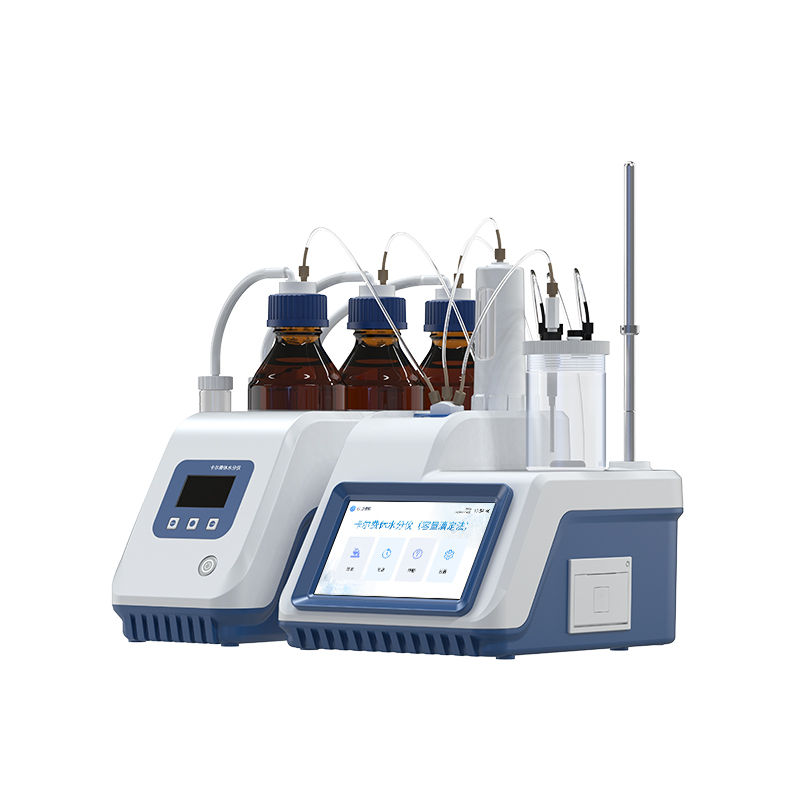
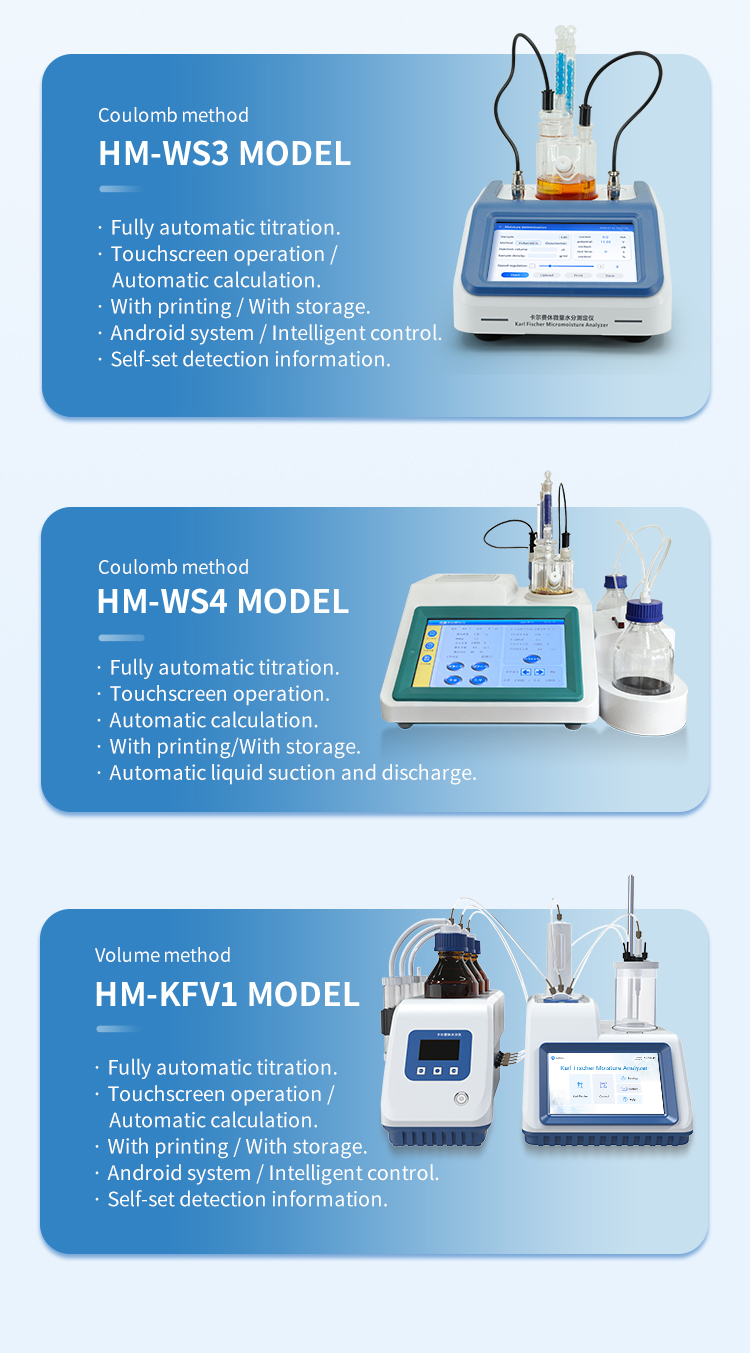
Volumetric Karl Fischer Titrator for Pharmaceutical Moisture Determination HM-KFV1
 +86
17853698681
+86
17853698681Product details



Product Introduction
Accurate water content determination is a critical quality control parameter across pharmaceutical manufacturing, chemical processing, food production, and petroleum refining. In pharmaceutical laboratories, moisture levels in active pharmaceutical ingredients (APIs), excipients, and finished products directly affect product stability, shelf life, and regulatory compliance. Chemical manufacturers must verify water content in solvents, reagents, and intermediates to ensure process consistency and product quality. In the food industry, moisture in oils and fats influences oxidation rates and product safety, while in the petroleum sector, water content in lubricants and fuels can cause corrosion and equipment damage.
Traditional gravimetric methods for moisture determination — such as loss-on-drying — are time-consuming, lack specificity for water, and cannot distinguish water from other volatile components. Coulometric Karl Fischer titration, while highly sensitive for trace moisture, is unsuitable for samples with water content above approximately 1–2%, as the generating electrode capacity is limited. This creates a gap for laboratories that need precise water quantification in samples with moderate to high moisture levels.
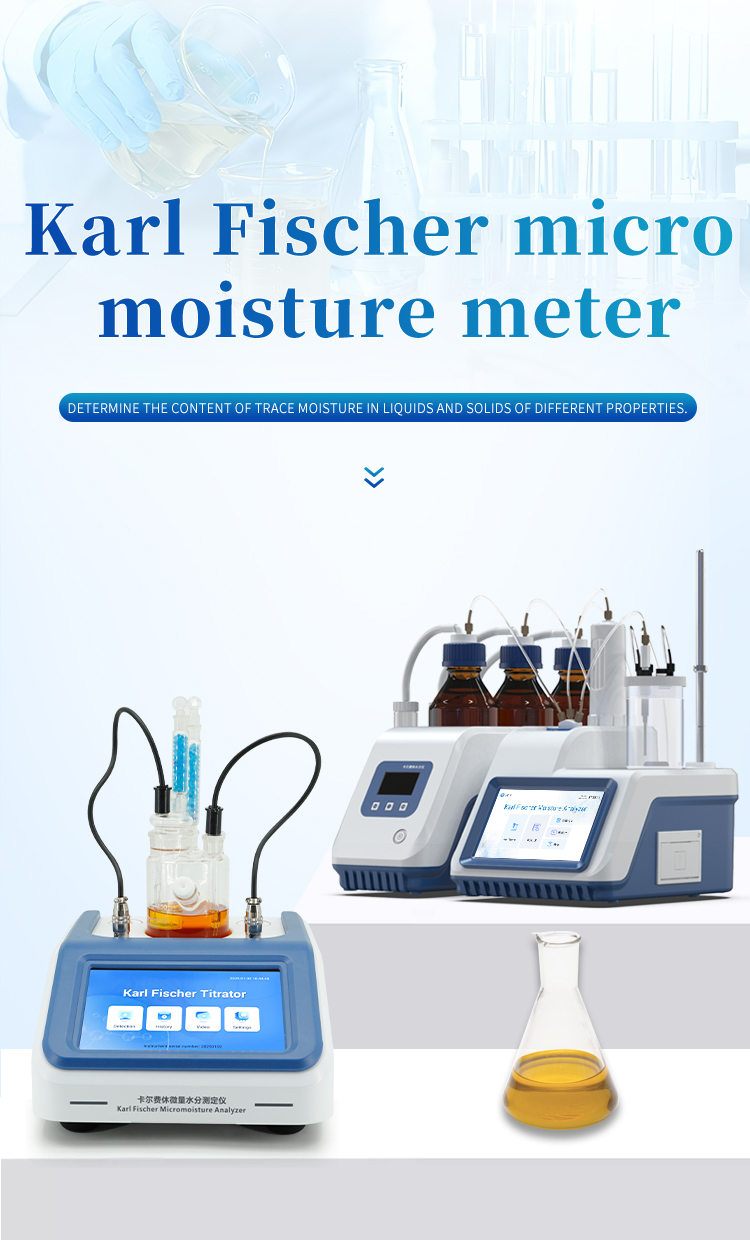
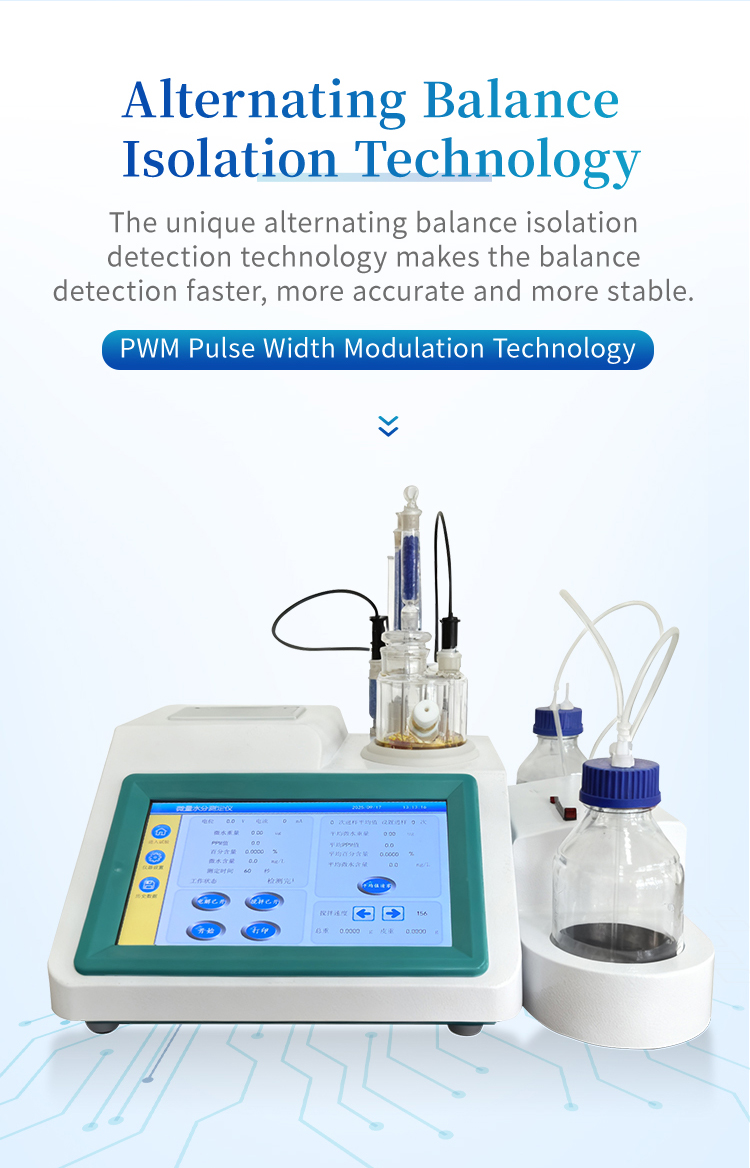
The HM-KFV1 addresses this gap as a Karl Fischer volumetric moisture titrator optimized for the 0.1% to 100% moisture range. Based on the stoichiometric reaction between iodine, sulfur dioxide, and water — the Karl Fischer reaction — the instrument employs dead-stop titration endpoint detection to identify the equivalence point with precision. Verified against JJG1154-2018, the national verification regulation for Karl Fischer volumetric moisture titrators, the HM-KFV1 delivers reliable and reproducible results.
The instrument comes standard with dual burettes (10 mL and 20 mL), providing flexibility to match titrant delivery to sample water content — the 10 mL burette for lower moisture samples and the 20 mL burette for higher moisture content, both with a minimum titration increment of 1 μL for controlled endpoint approach. The sealed fluid path uses PTFE tubing and fluorocarbon rubber seals to prevent solvent diffusion and chemical corrosion, ensuring measurement integrity over extended operation.
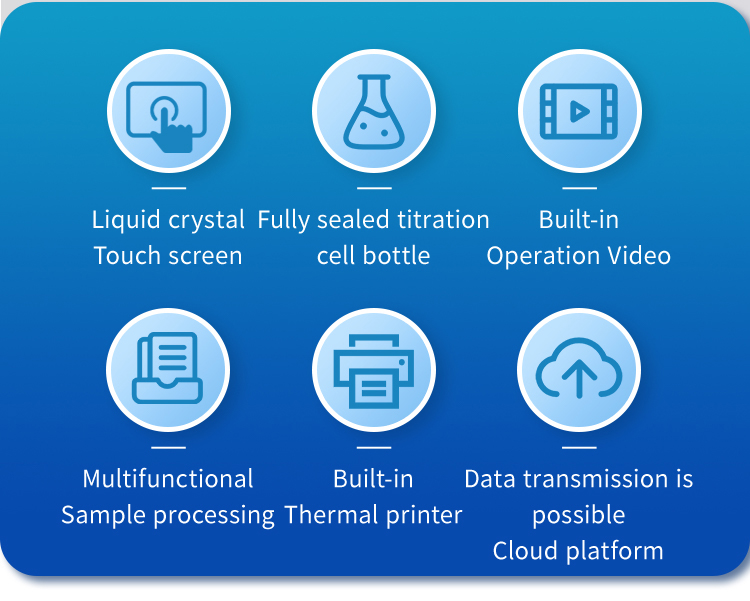
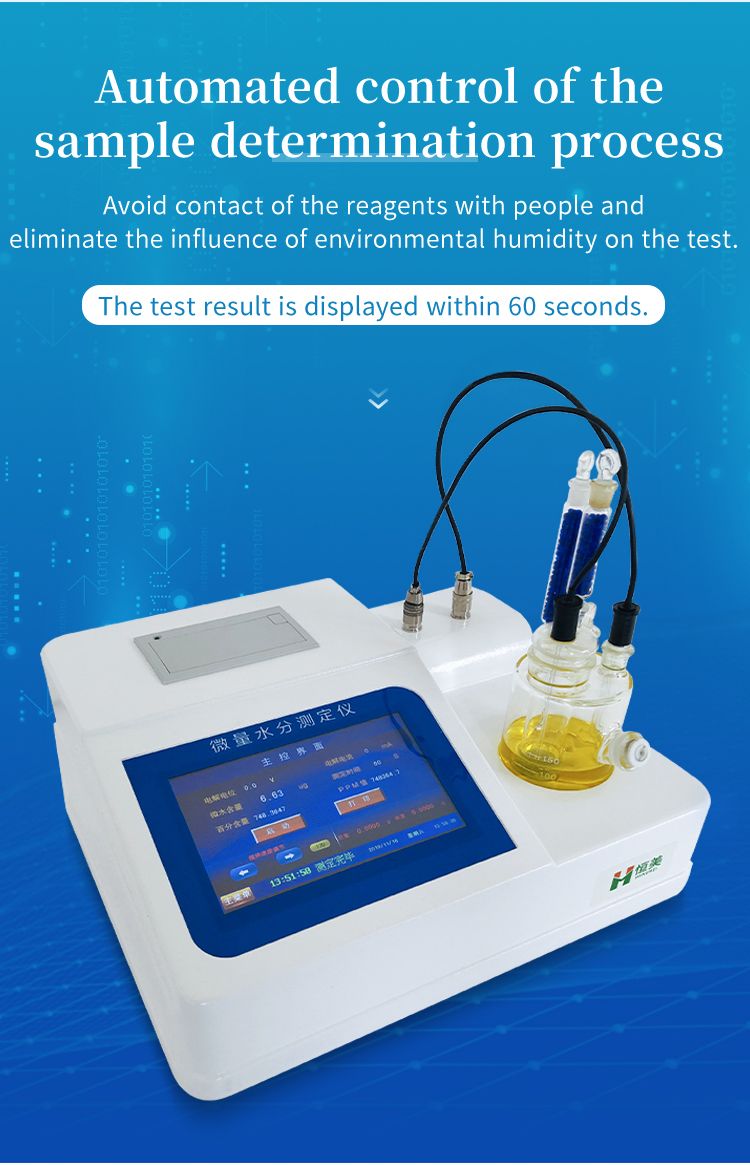
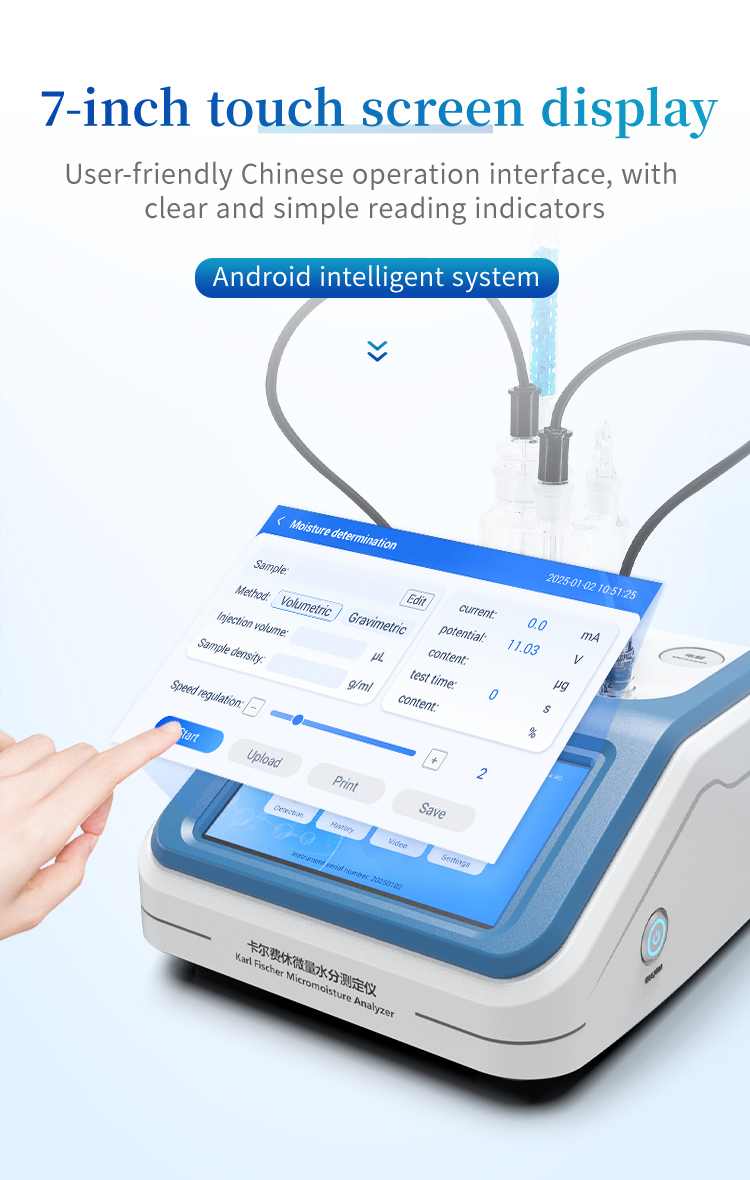
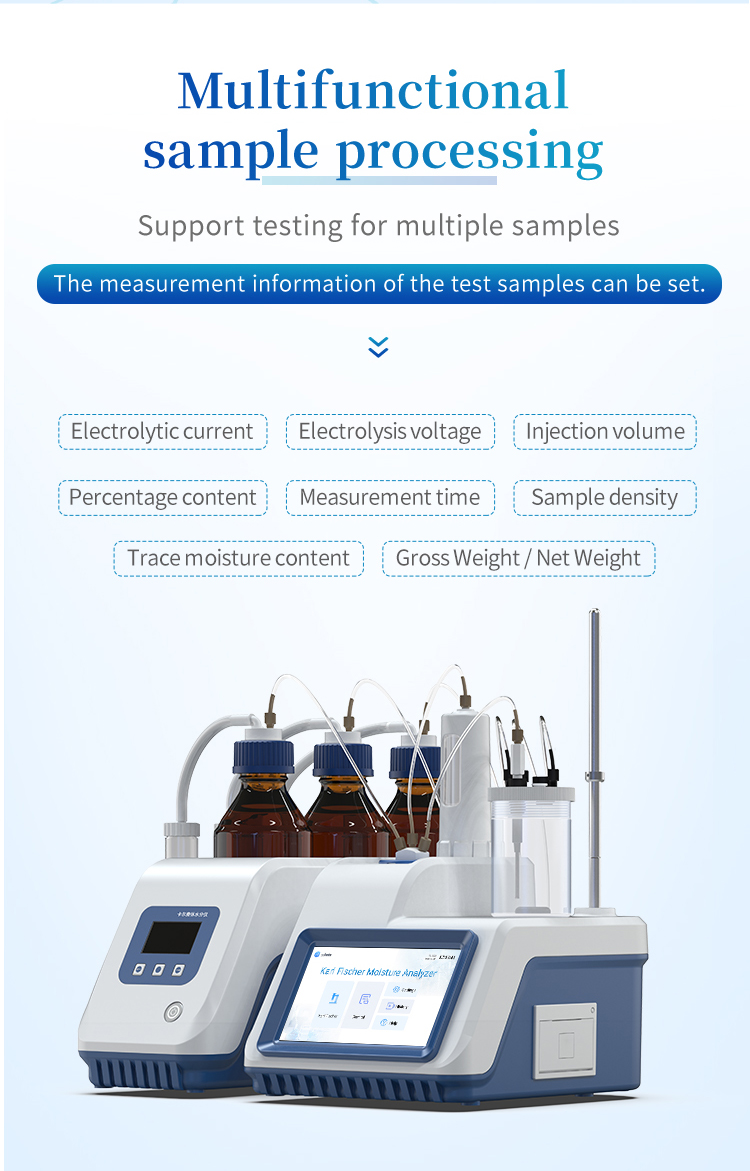
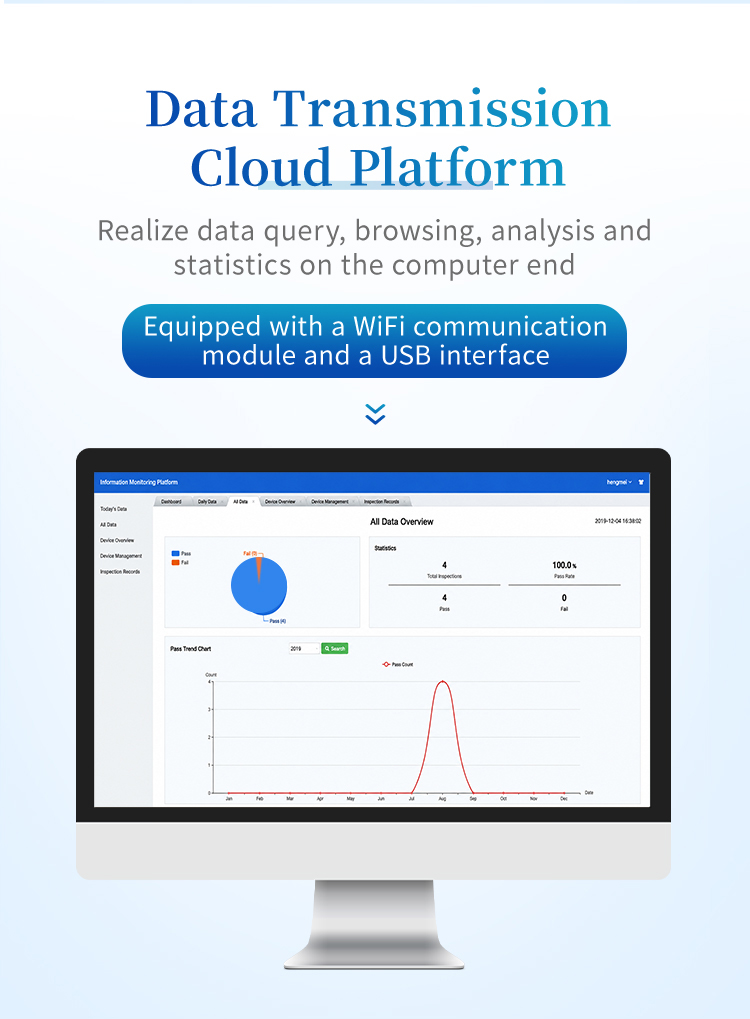
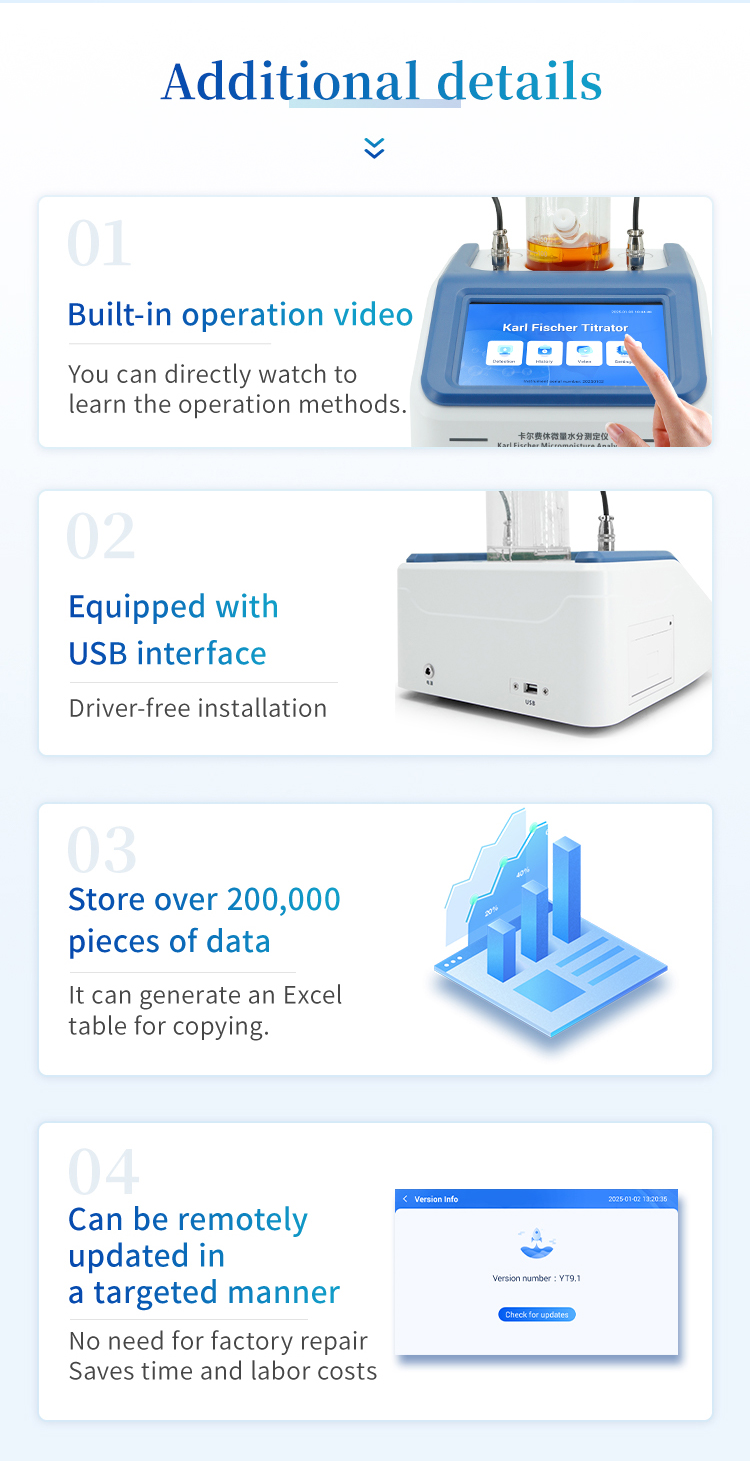
For regulated environments, the HM-KFV1 complies with FDA 21 CFR Part 11 requirements for electronic records and electronic signatures, and GLP guidelines for good laboratory practice. The Android-based 7-inch color touchscreen provides an intuitive interface for method setup, titration monitoring, and data management. Multiple result units (μg, mg, %, ppm) accommodate different reporting requirements. A built-in thermal printer enables on-demand documentation, while Wi-Fi connectivity supports cloud-based firmware updates for long-term instrument maintenance.
Applications
-
Pharmaceutical manufacturing: moisture in APIs, excipients, tablets, and injectable solutions for USP/EP/JP compliance
-
Chemical industry: water content in organic solvents, inorganic reagents, and reaction intermediates
-
Food processing: moisture determination in edible oils, fats, and dairy products
-
Petroleum and petrochemical: water content in lubricating oils, hydraulic fluids, and fuel products
-
Gas analysis: moisture in compressed gases and process gas streams
-
Soluble solid samples: moisture in polymers, salts, and other solids dissolved in appropriate solvents
Key Features & Advantages
-
Karl Fischer volumetric titration with dead-stop endpoint detection for precise water quantification in the 0.1%–100% range
-
Dual burettes (10 mL and 20 mL) standard, enabling flexible titrant volume selection based on expected moisture level
-
Minimum titration increment of 1 μL for controlled, precise approach to the titration endpoint
-
PTFE tubing and fluorocarbon rubber sealed fluid path preventing solvent diffusion and ensuring long-term corrosion resistance
-
FDA 21 CFR Part 11 compliance for electronic records, electronic signatures, and audit trail requirements in regulated laboratories
-
GLP-compliant operation with complete data traceability and method documentation
-
Android operating system with 7-inch color touchscreen for intuitive titration control and data review
-
Multiple result units (μg, mg, %, ppm) to meet diverse reporting standards across industries
-
Large storage capacity for measurement records supporting long-term data retention and regulatory audits
-
Built-in thermal printer for immediate on-site report generation at the point of analysis
-
Wi-Fi connectivity for cloud-based firmware updates ensuring the instrument remains current
-
Compliance with JJG1154-2018 verification regulation for Karl Fischer volumetric moisture titrators
-
Applicable to liquids, gases, and soluble solids — covering a broad range of sample types without additional accessories
-
Anti-diffusion design with fully sealed PTFE and fluorocarbon rubber components for reliable long-duration titrations
Technical Specifications
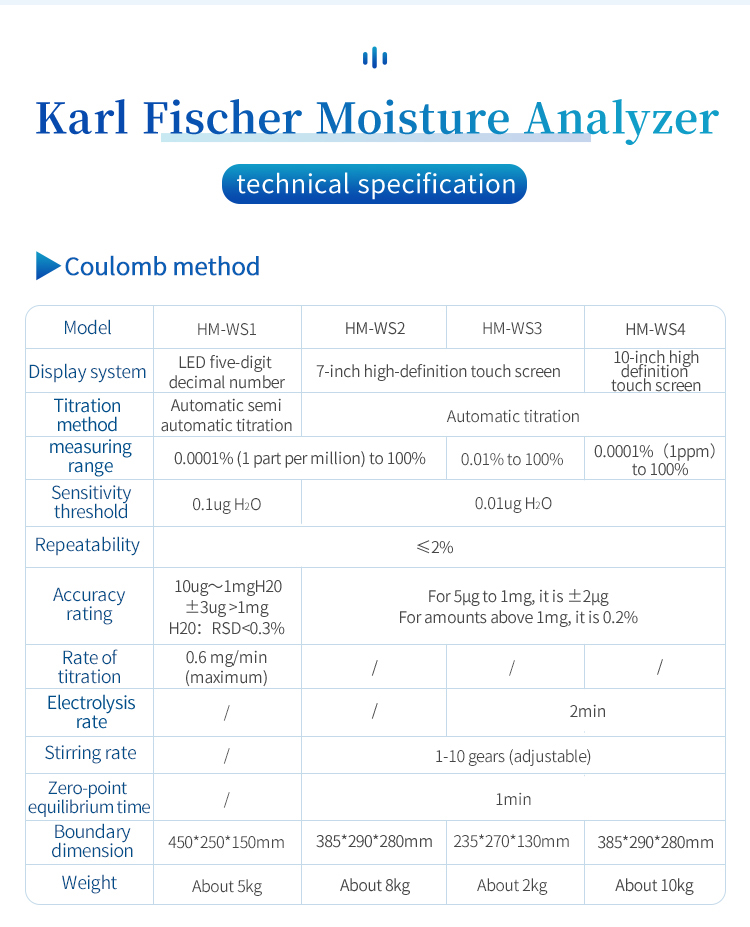
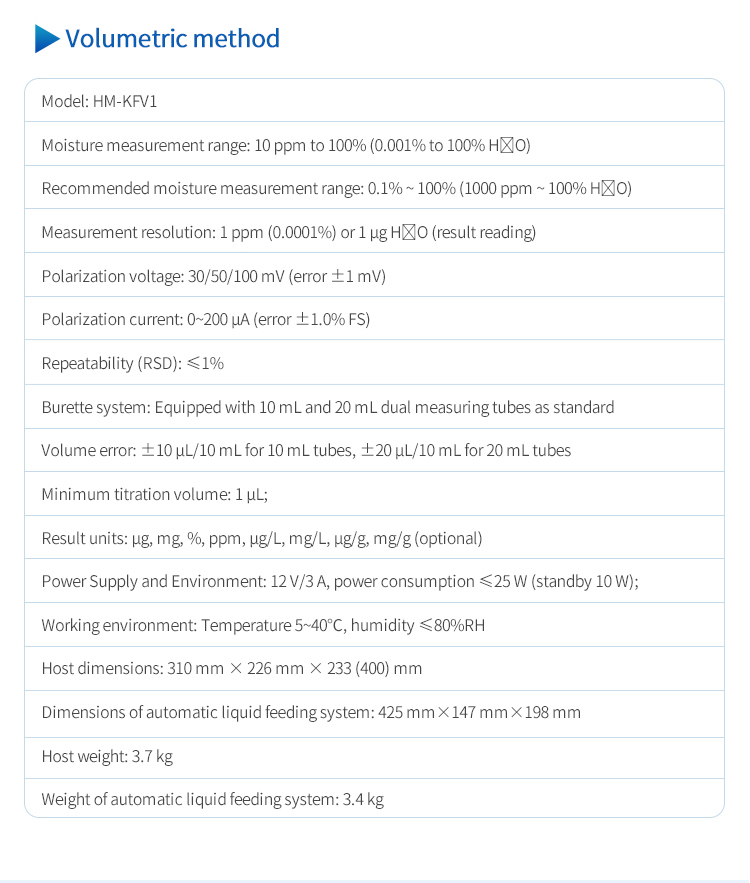
| Parameter | Specification |
|---|---|
| Model | HM-KFV1 |
| Titration Method | Karl Fischer volumetric titration, dead-stop endpoint detection |
| Moisture Measurement Range | 10 ppm to 100% |
| Recommended Measurement Range | 0.1% to 100% |
| Measurement Resolution | 1 ppm (0.0001%) or 1 μg H₂O |
| Polarization Voltage | 30 / 50 / 100 mV (±1 mV) |
| Repeatability (RSD) | ≤1% |
| Burettes | 10 mL and 20 mL (dual standard) |
| Minimum Titration Volume | 1 μL |
| Sealed Fluid Path | PTFE tubing, fluorocarbon rubber seals |
| Result Units | μg, mg, %, ppm |
| Compliance | FDA 21 CFR Part 11, GLP |
| Applicable Standard | JJG1154-2018 |
| Sample Types | Liquids, gases, soluble solids |
| Main Unit Dimensions | 310 × 226 × 233 (400) mm |
| Main Unit Weight | 3.7 kg |
| Auto Liquid Handling System Weight | 3.4 kg |
FAQ
Q1: What is the difference between volumetric and coulometric Karl Fischer titration?
The volumetric method delivers a titrant of known concentration from a burette to react with water in the sample, calculating water content from the titrant volume consumed. It is suited for samples with moderate to high moisture content (typically 0.1% to 100%). Coulometric titration generates iodine electrochemically within the cell and is designed for trace moisture determination (typically 1 ppm to 5%). The HM-KFV1 uses the volumetric method with dual burettes, making it the appropriate choice when sample water content is above the coulometric range.
Q2: Why does the HM-KFV1 include two burettes?
The dual burette configuration (10 mL and 20 mL) allows the operator to select the titrant delivery capacity appropriate for the expected moisture level in the sample. For samples with lower water content, the 10 mL burette provides finer volumetric control. For samples with higher water content, the 20 mL burette delivers sufficient titrant without refilling. Both burettes offer a minimum titration increment of 1 μL, ensuring precise endpoint approach regardless of which burette is used.
Q3: How does the HM-KFV1 ensure data integrity for FDA-regulated laboratories?
The HM-KFV1 complies with FDA 21 CFR Part 11 requirements, which mandate electronic record integrity, electronic signature validation, and complete audit trails for computerized systems in regulated environments. The instrument provides user authentication, secure data storage, and traceable method parameters. All measurement results, method modifications, and system events are logged, ensuring that data cannot be altered without detection. This compliance eliminates the need for separate paper-based record systems.
Q4: What types of samples can the HM-KFV1 analyze?
The HM-KFV1 can analyze three categories of samples: liquids (such as solvents, oils, and aqueous solutions), gases (such as compressed gases and process gas streams), and soluble solids (such as polymers, salts, and powders that can be dissolved in appropriate solvents). The wide measurement range of 10 ppm to 100% moisture, with a recommended range of 0.1% to 100%, accommodates most sample types encountered in pharmaceutical, chemical, food, and petroleum applications.
Q5: What is dead-stop endpoint detection in Karl Fischer titration?
Dead-stop endpoint detection applies a small polarization voltage across two platinum electrodes immersed in the titration cell. Before the endpoint, the solution contains excess iodine, which allows current to flow. When all water has been consumed by the Karl Fischer reaction and the iodine is depleted, the current drops sharply — this sudden change signals the titration endpoint. The HM-KFV1 offers selectable polarization voltages of 30, 50, or 100 mV (±1 mV) for optimization based on sample characteristics.
Q6: How does the PTFE anti-diffusion design benefit long-duration titrations?
During extended titration runs, solvent evaporation and atmospheric moisture ingress can affect measurement accuracy. The HM-KFV1 uses PTFE tubing and fluorocarbon rubber seals throughout the fluid path to create a fully sealed system that prevents both outward solvent diffusion and inward moisture penetration. This anti-diffusion design ensures that the measured water content corresponds only to the sample, not to environmental contamination, which is critical for achieving the instrument's specified ≤1% RSD repeatability.
Q7: Is the HM-KFV1 suitable for compendial water determination methods?
Yes. The HM-KFV1 performs volumetric Karl Fischer titration in accordance with the principles specified in pharmacopoeial methods for water determination (such as USP <921>, EP 2.5.12). Its compliance with JJG1154-2018 for instrument verification, combined with FDA 21 CFR Part 11 and GLP data integrity requirements, provides the necessary documentation and traceability for compendial testing in pharmaceutical quality control laboratories.
Article address:https://www.petrocheminstrum.com/pro2/volumetric-karl-fischer-titrator.html
Related products
-
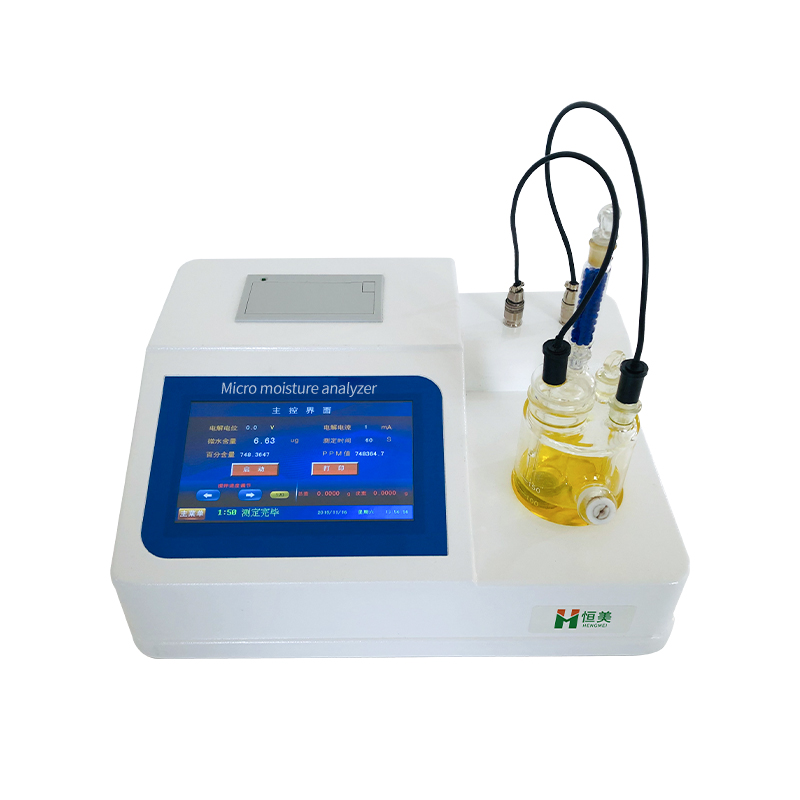
Automatic Karl Fischer Coulometric Titrator for Laboratory Moisture Analysis and Quality Control
-
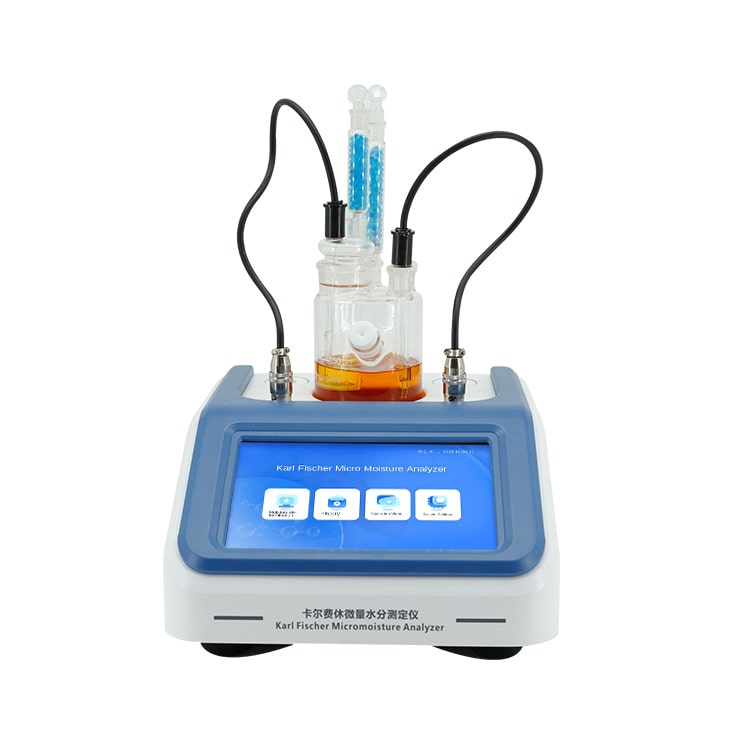
Portable Karl Fischer Coulometric Titrator for On-Site Petrochemical and Pharmaceutical Moisture Analysis
-
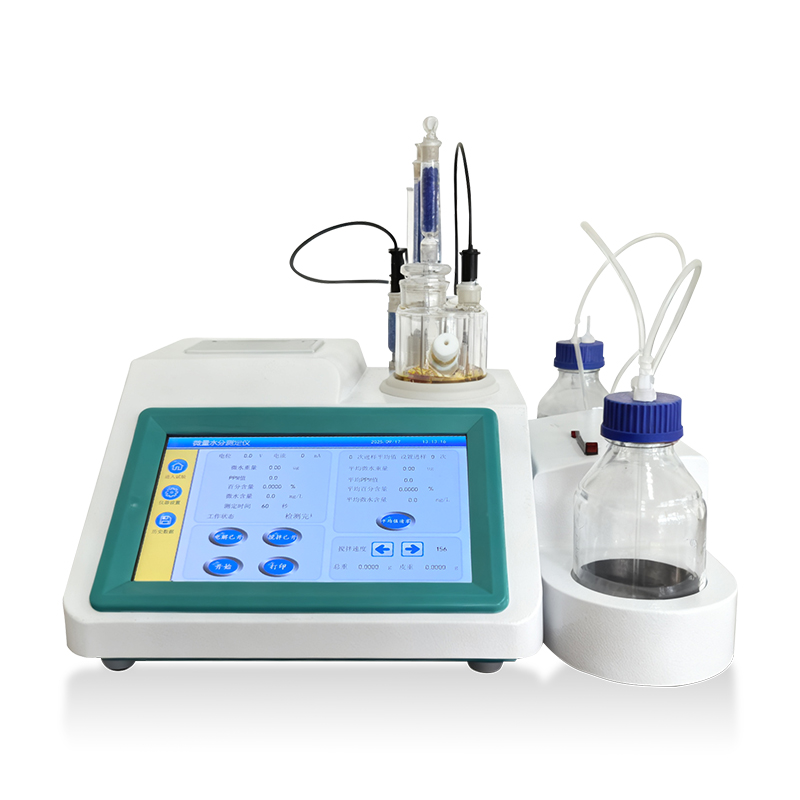
High-Precision Karl Fischer Coulometric Titrator for Trace Moisture Analysis in Quality Control Laboratories